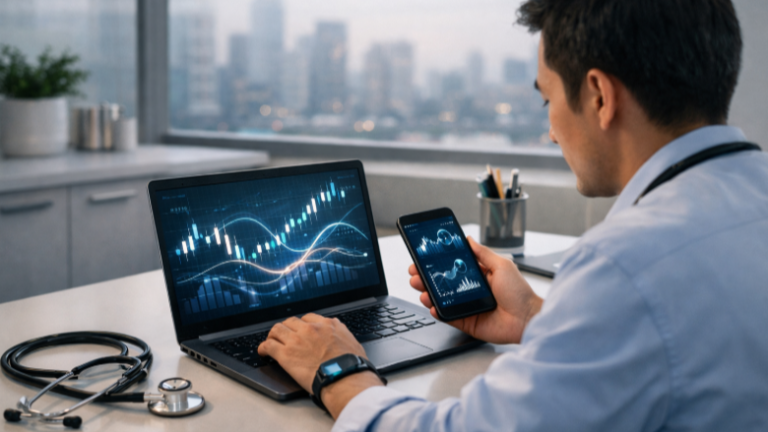
Health Tech for Doctors 2026: Redefining Clinical efficiency
Introduction: the rise of health tech in modern medicine
The healthcare industry is experiencing rapid transformation, and technology is at the centre of this evolution. In 2026, doctors are increasingly relying on advanced tools and systems to deliver faster, more accurate, and patient-centred care. The integration of health tech into daily medical practice is no longer optional; it is essential for staying relevant in a competitive, demanding environment.
Doctors today face challenges such as rising patient expectations, administrative overload, and the need for continuous learning. Traditional methods alone are no longer sufficient to handle these demands. This is where health tech steps in, offering innovative solutions that streamline workflows, improve diagnostics, and enhance patient experiences.
From digital records to wearable devices, health tech is reshaping how doctors interact with patients and manage their practices. This blog explores the key aspects of health tech in 2026 and how it is transforming the medical profession.
Understanding health tech and its role for doctors
Health tech refers to the use of technology to improve healthcare delivery, management, and outcomes. It includes tools such as electronic health records, telemedicine platforms, wearable devices, and data analytics systems.
For doctors, health tech simplifies complex processes and provides access to real-time information. Instead of relying on paper records and manual systems, doctors can use digital platforms to efficiently manage patient data.
The importance of health tech lies in its ability to enhance accuracy and reduce errors. By digitizing information and automating tasks, it ensures that critical data is easily accessible and up to date.
Another key advantage is improved communication. Doctors can instantly share information with other healthcare professionals, leading to better coordination and patient care.
Electronic health records and digital documentation
One of the most significant components of health tech is electronic health records. These systems allow doctors to store, access, and update patient information digitally.
Platforms like Epic Systems and Cerner are widely used in hospitals and clinics around the world. They provide a centralized system for securely storing all patient data.
Electronic records reduce paperwork and minimize the risk of losing important information. Doctors can quickly access patient history, test results, and treatment plans, enabling faster decision-making.
Digital documentation also improves accuracy. Automated systems reduce the chances of human error and ensure that records are consistent and reliable.
Telemedicine and remote consultations
Telemedicine has become an essential part of modern healthcare, especially after the global shift toward digital services. Health tech platforms enable doctors to consult patients remotely, saving time and improving accessibility.
Applications like Teladoc allow doctors to connect with patients through video calls and online messaging. In India, Practo provides similar services, including appointment management.
Remote consultations are particularly beneficial for patients in rural or underserved areas. Doctors can provide care without the need for physical visits, reducing travel time and costs.
Telemedicine also supports follow-up consultations, allowing patients to receive guidance without visiting the clinic. This improves convenience and patient satisfaction.
Wearable devices and real-time monitoring
Wearable technology is another important aspect of health tech. Devices such as the Apple Watch and apps like Google Fit enable continuous monitoring of vital signs.
These devices track parameters such as heart rate, activity levels, and sleep patterns. Doctors can use this data to monitor patients remotely and identify potential health issues early.
Real-time monitoring is especially useful for managing chronic conditions such as diabetes and heart disease. Doctors can receive alerts and take immediate action when necessary.
Wearable devices also encourage patients to take an active role in their health. By providing insights into daily habits, they promote healthier lifestyles.
Health tech in diagnostics and treatment
Advanced diagnostic tools are transforming how doctors identify and treat diseases. Health tech includes portable devices and point-of-care testing systems that deliver quick, accurate results.
These tools reduce the time required for diagnosis and allow doctors to start treatment sooner. Faster diagnosis leads to better outcomes and improved patient satisfaction.
Data analytics plays a crucial role in treatment planning. By analyzing patient data, doctors can identify patterns and choose the most effective treatment options.
Health tech also supports personalised medicine by accounting for individual factors, such as genetics and lifestyle. This leads to more targeted and effective treatments.
Improving workflow and efficiency with health tech
Managing a medical practice involves multiple tasks, from scheduling appointments to maintaining records. Health tech simplifies these processes and improves efficiency.
Automated systems can handle appointment scheduling, reminders, and billing. This reduces administrative workload and allows doctors to focus on patient care.
Digital platforms also enable better coordination among healthcare teams. Doctors, nurses, and specialists can access the same information and collaborate effectively.
By streamlining workflows, health tech helps doctors save time and reduce stress. This leads to a more productive, organised practice.
Data security and privacy in health tech
With the increasing use of digital systems, data security has become a critical concern. Health tech platforms use advanced security measures to protect patient information.
Encryption, secure access controls, and regular updates ensure that data remains safe. Doctors must also follow best practices, such as using strong passwords and avoiding unauthorised access.
Maintaining patient confidentiality is essential for building trust. By using secure health tech systems, doctors can ensure that sensitive information is protected.
Future trends in health tech for doctors
The future of health tech is driven by innovation and integration. Technologies such as artificial intelligence and machine learning are being combined with existing systems to provide smarter solutions.
Remote monitoring will become more advanced, with devices providing more detailed and accurate data. Telemedicine platforms will continue to evolve, offering improved features and better user experiences.
Integration between different systems will create a seamless ecosystem where doctors can manage all aspects of their practice from a single platform.
As health tech continues to develop, it will offer new opportunities to improve patient care and enhance medical practice.
Conclusion:
Health tech is transforming the way doctors deliver care, manage patients, and run their practices. It provides tools that improve accuracy, efficiency, and patient satisfaction.
By adopting health tech, doctors can stay ahead in a rapidly changing healthcare environment. It allows them to provide better care while managing their workload effectively.
In 2026, the successful doctor is not only skilled in medicine but also equipped with the right technology. Embracing health tech is the key to achieving both professional excellence and improved patient outcomes.
Frequently asked questions
What is health tech, and why is it important for doctors
Health tech refers to technologies that improve healthcare delivery, making it easier for doctors to manage patients and provide accurate treatment.
How does health tech improve patient care?e
It provides real-time data, faster diagnostics, and better communication, leading to improved outcomes and patient satisfaction.
Which platforms are commonly used in health tech
Systems such as Epic Systems and Cerner are widely used to manage patient data.
Is health tech safe for storing patient information
Yes, most platforms use advanced security measures such as encryption and secure access controls to protect data.
What is the future of health tech for doctors?
The future includes more advanced monitoring, better integration, and smarter systems that enhance both efficiency and patient care.